

Expert Behavior Guidance Tailored to Your Cat (Or Cats)
How your cat behaves tells you a lot about her overall wellness. Cats communicate with us and other cats in many ways. Research studies give us a great deal of information about how cats communicate.
Many pet parents are familiar with dog body language. Reading and understanding cat body language is the first step toward a better relationship with your cat.

Common Cat Behavior Problems
Many cat owners come across one of the main feline behavior problems during their cat ownership. I have the knowledge and experience to prevent, manage, and resolve many issues such as:
Behavior Support:
How We Can Work Together
Book Your Virtual Cat Behavior Session Below

Click here for Nutrition Support
90-Minute Deep Dive Cat Behavior Consultation
$299: 90 - Minute Deep Dive Consultation
Evidence-based behavioral diagnostics and targeted intervention strategies.
Owners dealing with specific cat behavior problems such as litter box issues, human-directed aggression, extreme fearfulness, nighttime vocalization, counter surfing, food obsession, or compulsive behaviors like pica.
-
✔️ A comprehensive review of your cats’ medical and behavioral history, feeding, and enrichment routine.
✔️ Discuss basic animal behavior and learning.
✔️ Evaluate your options and recommend immediate actions.
✔️ Offer evidence-based, practical behavior modification techniques.
-
✔️ You're a new cat owner looking for socialization tips and routines for your kitten.
✔️ Your cat wakes you up at night wanting to play, and you’re desperate for sleep.
✔️ Cats that are eliminating outside the litter box.
✔️ Counter surfing, scratching furniture, or vocalizing at night.
✔️ Attention-seeking or compulsive behavior.
✔️ New cat and kitten owners can learn how to set up a purrfect environment for their new family addition.
✔️ Owners of senior cats who would like to adjust their environment to suit an aging cat.
-
✔️ 90-Minute Zoom Intensive: Comprehensive assessment and functional analysis to evaluate behavior-eliciting stimuli, environmental stressors, and ecological factors.
✔️ Custom Behavior Modification Plan: A personalized, step-by-step written plan that addresses the cause of the behavior and how to manage it.
✔️ 1 Week of Follow-Up Support: Limited to 1-3 emails to troubleshoot issues and adjust the plan as your cat progresses.
Additional follow-up sessions or extended support packages are available separately.

90-Minute Initial Cat Introduction Session
$299: 90-Minute Initial Assessment Call
This is your first session, and depending on your situation, you can book follow-up sessions.
Ideal for failed cat Introductions & severe inter-cat aggression. A structured approach to mitigating inter-cat aggression through systematic desensitization and counterconditioning, including pattern games and thorough observation of body language.
-
✔️ Review your environmental setup.
✔️ Offer evidence-based, practical recommendations to introduce cats to each other in multi-cat homes.
-
✔️ Your cats used to get along but now there’s tension — and you need a reintroduction plan
✔️ You’ve brought home a new cat, but your resident cat isn’t welcoming them peacefully
✔️ You want to ensure a safe, structured transition during a cat introduction
-
✔️ One 90-minute virtual consultation including a walkthrough of your home, mapping out a supervised introduction phase.
✔️A comprehensive review of your multi-cat home environment, daily routine, feeding schedule, and enrichment activities, using your intake form and any client-submitted videos of the behavior problem, conducted before we meet.
✔️ Written behavior modification plan with immediate suggestions and customized recommendations.
✔️ Phased Introduction Roadmap: A detailed, milestone-based guide telling you exactly when and how to safely advance to the next integration stage.
✔️ One week of email support and review of your training videos online. (1-3 emails per week max)
✔️ Information about relevant feline behavior research.
Existing Clients, Click Here to Book Follow-Up Sessions
Expert Behavior Guidance Tailored to Your Cat
The way your cat behaves tells you a lot about her overall wellness. Cats communicate with us and other cats in many ways. Research studies give us a great amount of information how cats communicate. Many of pet parents are familiar with dog body language. Reading and understanding cat body language is the first step towards a better relationship with your cat.

Why is cat body language important?
Cats communicate with their ears, whiskers, tail and eyes and it will give you information about the mood state they are in:
Are the ears flat to the head?
Are the pupils dilated?
Where are the whiskers positioned?
Is the tail straight up, or twitching sidewards?
Is the cat vocalizing?
Look at the whole body to put everything in context!
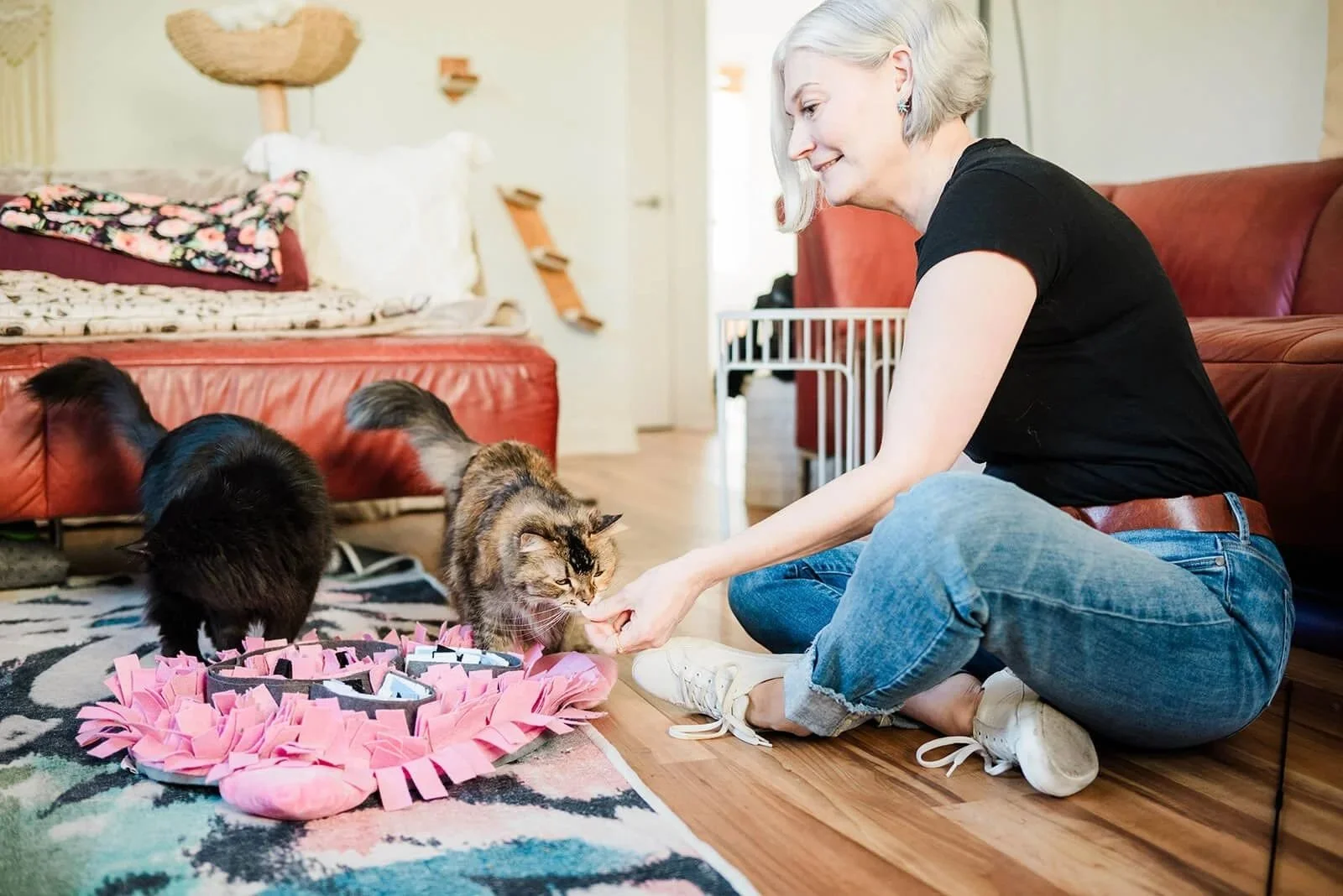
Use positive reinforcement R+ to train your cat.
The Feline Consultant provides information about the latest research studies surrounding cat behavior and science-based training methods that include positive reinforcement, desensitization and counterconditioning.
I will develop a customized plan to match your personal situation and explain basic animal learning theories including classical and operant conditioning.
With your schedule and home situation in mind I will get you started with basic cat training techniques including pattern games and clicker training.
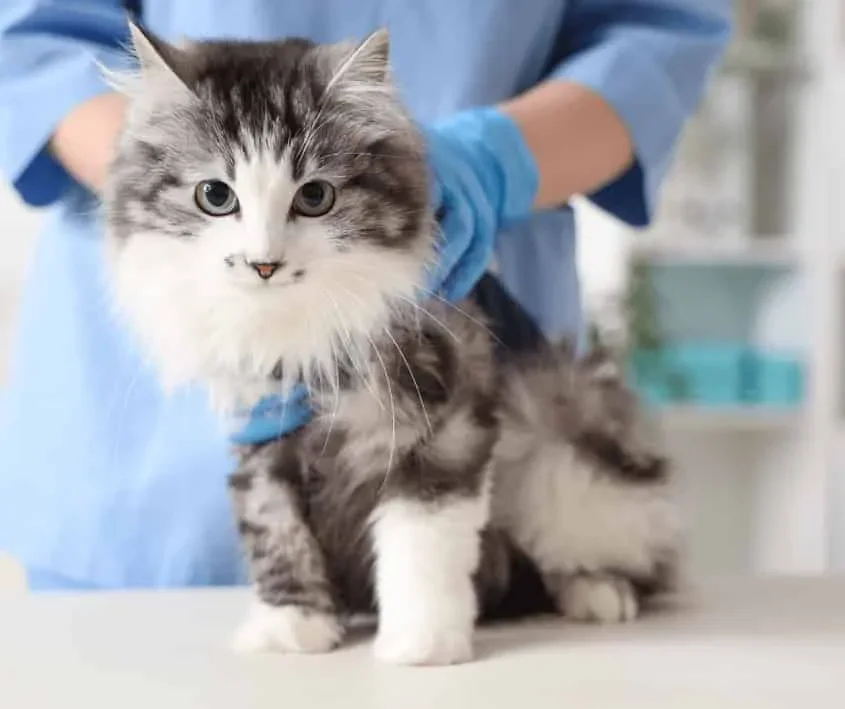
Talk to your veterinarian about sudden behavior changes.
Behavioral issues can stem from underlying health conditions. It is important to take an approach that rules out medical issues and discuss sudden changes in behavior with your veterinarian.
Cats are masters at hiding pain. As prey and predator animals cats have a strong instinct to hide pain in order to survive. A great tool to assess your cat’s acute pain level is the Feline Grimace Scale.
The Feline Grimace Scale (FGS) (© Université de Montréal 2019) is a valid, fast, reliable and easy-to-use tool that can help with pain assessment. Based on the scores of the Feline Grimace Scale, it is possible to know if the administration of analgesics (i.e. pain killers) is required helping veterinarians with clinical decisions in pain management.

Observe your cat’s emotions:
Observe your cat’s body language and the context situation in your home closely. The information will be invaluable to assess the mood state your cat is in:
Did your resident cat start behave differently when you added another feline friend to the household?
Is your cat suddenly acting aggressively towards you?
Does your cat keep you up at night?
Did your cat start spraying once you moved into that new house?
Learn more about your cat’s emotions with me.