
How to make homemade cat food?
Every cat owner dreams of their feline living a long, lively life, and that love often leads them to prepare fresh, homemade meals. If you’ve ever browsed social media looking for a homemade cat food recipe, you might wonder: is that generic internet recipe really safe for your furry friend?
Cooking for your cats often stems from genuine love, avoidance of ingredients, or a general mistrust of the commercial pet food industry; understanding cat nutrition requires careful attention to detail. Formulating a diet that promotes long-term health involves knowing a cat’s unique metabolic needs, balancing nutrients precisely, and using specialized professional tools to get it just right.
Professional Software and Experience
Formulating a complete and balanced cat food diet requires software and experience with cat palatability preferences. The software stores nutrient information for various ingredients, AAFCO minimum and maximum guidelines for essential nutrients, and calculations for caloric density, feeding amounts, and adjustments for highly active kittens or sedentary senior cats.
I see many ratio-based diets (80/20 or 80/10/10) online. Many are incomplete or unbalanced for adult cats. They lack essential vitamins or minerals and should not be fed long-term.
Many Facebook groups promote so-called “meal completers.” Meal completers are expensive multivitamin products that make things easy for the owner. However, they aren't precise enough to prevent overdosing or underdosing your cat on essential vitamins and minerals. Meal completers don’t account for the nutritional differences between meat and organ meats.
Here is a scientific look at how a professional formulation protects your cat's health compared with a standard DIY internet recipe.
The Importance of Macro- and Micronutrients
Cats are obligate carnivores with unique metabolic pathways. A slight imbalance in their daily intake can lead to subtle, irreversible health complications over time.
Using exact ingredient measurements and information helps ensure a diet is accurate and safe. While online recipes often use flexible estimates like "3 or 4 oz of liver" or "1 or 2 teaspoons of fish oil," these slight differences can significantly impact the fat-to-protein ratio and fat-soluble vitamin levels in the diet. Precise measurements are key to keep the diet balanced.
Critical essential nutrients like Vitamin D and Taurine—an amino acid vital for cats' heart and eye health—need to be measured carefully. Whether in International Units (IU) or milligrams. Professional recipes specify exact doses, such as Vitamin D or E – 400 IU to ensure fat-soluble vitamins are not overdosed or underdosed.
In contrast, DIY guides often suggest tablespoon measures that might overlook the specific nutrient profile of the meat you're using, which can lead to deficiencies or overdose.
Many DIY recipes often mention only the basic main protein, like 2 lbs. of turkey or beef, without much detail, which can make planning a balanced diet tricky. The protein-to-fat ratio matters, and choosing between 95% lean beef and 70% lean beef can change the outcome and affect your cats' long-term well-being.
Caloric Density and Metabolic Energy
A major risk of uncalculated recipes is missing caloric density data.
Professionally formulated diets use specialized software to cross-reference the Association of American Feed Control Officials (AAFCO) minimum and maximum nutrient guidelines. This mathematical framework determines the meal's exact caloric density. It enables precise adjustments for life stage and metabolic needs—ensuring that a highly active kitten receives enough food to support growth while a sedentary senior cat maintains an ideal body condition score without developing hepatic lipidosis or obesity.
Generic DIY recipes provide no information on caloric density, leaving owners to guess daily feeding amounts.
What a Full Guaranteed Analysis Tells You
When a diet is professionally formulated, it includes a comprehensive laboratory-style breakdown that may look overwhelming at first. But the amount of data provides you with transparency:
Dry Matter (DM) Analysis: True percentages of protein, fat, ash, and carbohydrates, adjusted for moisture content.
Nutrient Profiles: Comprehensive tracking of essential minerals, vitamins, and vital amino acids.
A standard internet recipe simply cannot provide this data, leaving your cat's long-term organ health to chance.
Meal Rotation Does Not Guarantee Completeness
To compensate for the lack of attention to nutritional nuances, “rotation” is recommended. Rotation does not guarantee a complete diet for your cat; it’s like playing roulette.
I ordered several completers/premixes online and was surprised to find that some lack basic ingredient and nutrient profile details. Without this essential information, it's impossible to assess if the diet provides adequate or excessive levels of vitamins and minerals for a cat.
Most meal completers don’t contain omega-3 fatty acids, so they need to be added in the form of fish oil or another source.
Omega-3 Fatty Acids - EPA/DHA are Important Nutrients
EPA and DHA are essential for a cat’s immune system. DHA is vital for neurological and visual development during pregnancy and growth.
In completers/premixes that contain powdered fish oil, the valuable unsaturated fatty acids are likely to have oxidized and are no longer available to the animal. Because unsaturated fatty acids are highly prone to oxidation, I prefer to add liquid fish oil to homemade diets.
Nurturing Your Cat with Safety First
If you're thinking about moving your cat away from commercial kibble or canned food, follow a plan based on trusted scientific research. If you don’t have the resources to create a customized, professionally prepared fresh diet, the safest choice is to choose high-quality commercial foods that meet AAFCO guidelines for all life stages. This way, you can feel confident you're providing your cat with a healthy and balanced diet.
Ready to Nourish Your Cat with Confidence?
You don't have to guess about your cat's health. I combine a deep passion for feline wellness with advanced nutritional science to create custom meal plans tailored perfectly to your cat's age, weight, and health status.
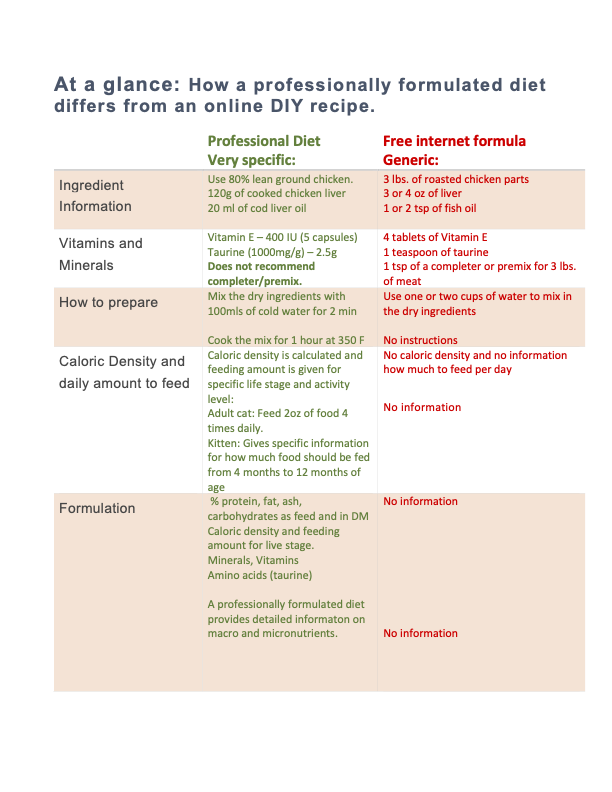
Image shows the difference between a professionally formulated cat food diet and a free internet recipe